Starting Solids: Your Honest, No-Panic Guide to Weaning Your Baby
Purees or baby-led? When to start? What about allergens? Everything you actually need to know about weaning, minus the guilt and the overthinking.
I spent three days steaming, pureeing, and freezing tiny ice-cube trays of butternut squash for my baby's first taste of real food. Labelled them with dates. Stacked them neatly. Felt genuinely proud of myself.
My baby took one look at the loaded spoon, grabbed it out of my hand, and launched it across the kitchen. The dog ate the butternut squash. The baby ate her own fist. Welcome to weaning. 🍌
If you are feeling overwhelmed by the sheer volume of advice out there about when to start, what to give, and whether purees or finger food will ruin your child forever, take a breath. Weaning is messier, simpler, and far less scary than the internet makes it sound. Here is everything you actually need to know.
When Is Your Baby Ready?
The official guidance says around six months. Not exactly at six months, not at four months because your mother-in-law insists that "a bit of baby rice never hurt anyone." Around six months, when your baby shows three specific signs together.
They can sit up with minimal support and hold their head steady. They can coordinate their eyes, hands, and mouth to look at food, grab it, and get it roughly towards their face. And they have lost the tongue-thrust reflex, which means food goes in rather than being automatically pushed back out.
Waking up at night or chewing their fists are not signs of readiness, even though every well-meaning relative will tell you otherwise. Babies chew their fists because fists exist. It is not a cry for carrot batons.
Purees, Baby-Led, or Just... Both?
This is the question that launches a thousand forum arguments, and the honest answer is: it does not matter nearly as much as people think.
Traditional weaning means starting with smooth purees and gradually introducing lumpier textures over weeks and months. It gives you a sense of control over exactly what goes in. It can feel reassuring, especially with your first baby.
Baby-led weaning (BLW) means skipping purees entirely and offering soft finger foods from the start. Your baby feeds themselves. It encourages independence, reduces fuss about textures later, and means you can mostly give them what you are eating. It is also spectacularly messy.
And then there is the combination approach, which is what most parents actually end up doing whether they planned to or not. A bit of mashed avocado on a spoon, a steamed broccoli floret to gnaw on, some porridge fingers for breakfast. Flexible, relaxed, and completely fine.
Pick whichever approach feels right for your family. Your baby will not care about the label. They will care about whether the food is interesting enough to throw at the wall. 🥦
The Gear You Actually Need
You do not need a baby food maker, a special weaning cookbook, or a matching set of silicone everything in a trending colour. But a few key bits will make your life genuinely easier.
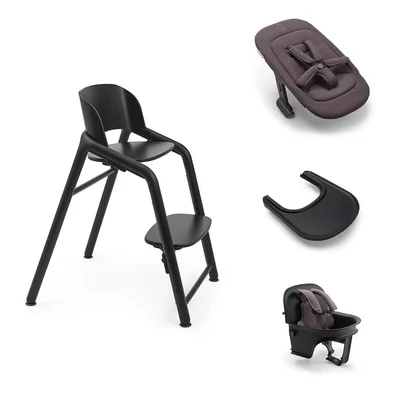
A decent highchair
This is the one piece of weaning kit worth investing in. You need something sturdy, easy to clean, and with a footrest so your baby can sit properly. A good highchair gets used multiple times a day for years, not months. Look for one that wipes down in seconds, because puree gets into every crevice you did not know existed.

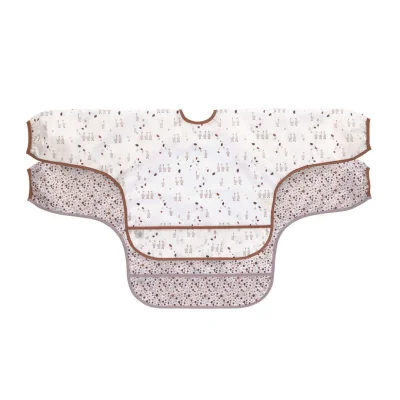
Long-sleeve bibs
Regular bibs are sweet, but they protect about 15% of the surface area that actually gets covered in food. Long-sleeve bibs are the real heroes of weaning. They cover arms, chest, and lap. Some have a pocket at the bottom to catch falling food. You will want at least two so one can be in the wash while the other is on duty.
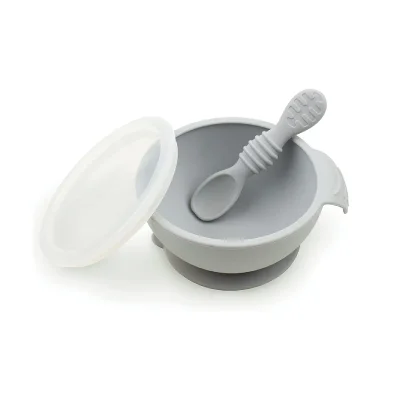
Bowls and utensils
Suction bowls are worth their weight in gold because babies love nothing more than flipping a bowl upside down and watching its contents fly. A bowl that sticks to the highchair tray buys you an extra thirty seconds of actual eating. Soft-tipped spoons are gentler on gums, and pre-loaded spoons work brilliantly for babies who want to feed themselves but have not quite mastered scooping yet.

Once your baby gets more confident, a proper plate and cutlery set makes mealtimes feel like a real event. Silicone sets are practically indestructible and dishwasher safe, which matters more than you think it will.


First Foods to Try This Week
Forget the complicated meal plans. These are brilliant starter foods that are easy to prepare, nutritious, and unlikely to end up on your ceiling (no promises though).
- Steamed broccoli florets - the built-in handle makes them perfect for tiny fists
- Mashed or sliced avocado - creamy, mild, and packed with good fats
- Banana - leave the bottom of the skin on for grip (game changer)
- Steamed carrot batons - soft enough to squish between your fingers
- Porridge - mix with breast milk or formula for a familiar taste
- Toast fingers with smooth peanut butter - yes, really (more on allergens below)
- Natural yoghurt - full fat, no added sugar, pre-loaded onto a spoon
The key with all of these: cook vegetables until they are soft enough to squish easily between your thumb and finger. If you can do that, your baby can manage it with their gums.
The Allergen Bit (It Is Less Scary Than It Sounds)
This is the part that makes most parents nervous, and understandably so. But the current guidance is actually reassuring: introduce common allergens early and often.
From around six months, offer small amounts of peanut (as smooth peanut butter, never whole nuts), well-cooked egg, cow's milk in cooking, wheat, fish, and sesame. Introduce them one at a time so you can spot any reaction, but do not leave big gaps between each one. The goal is to get your baby eating all the major allergens regularly by the time they are one.
Give new allergens early in the day rather than at the evening meal, so you have daylight hours to keep an eye on things. And if there is a history of allergies in your family, have a chat with your GP before you start. Most babies sail through allergen introduction without a single issue.
What Is Completely Normal (Even Though It Looks Terrifying)
Gagging
Gagging is not choking. Gagging is your baby's safety mechanism working exactly as it should, pushing food forward that has gone too far back. It is loud, dramatic, and deeply unsettling to watch, but it is normal. Choking is silent. Learn the difference before you start weaning, and consider doing an infant first aid course for peace of mind.
Eating almost nothing
For the first few weeks, weaning is about exploration, not nutrition. Milk is still the main event. If your baby eats one piece of broccoli and throws the rest, that counts as a successful meal. Seriously.
The mess
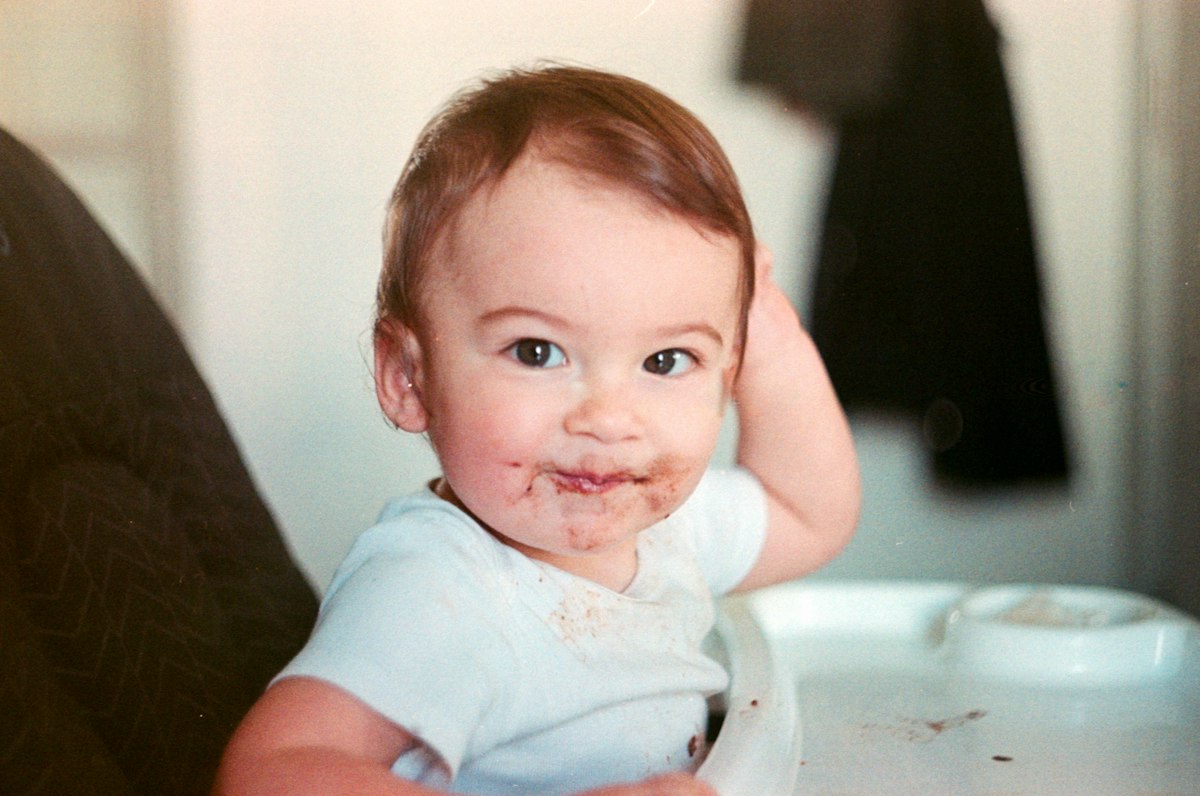
There is no way around this. Food will end up in hair, ears, eyebrows, and places you did not think food could reach. A plastic mat or old shower curtain under the highchair saves your floor and your sanity. Embrace the chaos. It is genuinely how babies learn to eat.
Refusing foods they loved yesterday
Your baby will demolish sweet potato on Monday, refuse to look at it on Tuesday, and request it again on Friday. This is normal toddler behaviour starting early. Keep offering rejected foods without pressure. It can take ten to fifteen exposures before a baby accepts a new food, so do not cross anything off the list after one refusal.
The Short Version
Wait until around six months. Watch for the three readiness signs. Pick an approach that works for your life. Start with simple, soft foods. Introduce allergens early. Accept the mess. And most importantly, try not to compare your baby's eating to anyone else's baby's eating, because every single one of them does it differently.
Weaning is one of those parenting milestones that looks complicated from the outside but mostly involves handing your baby a piece of banana and seeing what happens. You have got this. ❤️
Want to build a weaning wishlist so friends and family can help with the gear? Create your BubsNest registry and add everything in one place.
Ready to Create Your Baby Registry?
Start your free baby registry today and share it with friends and family.